
 +86-23-65764808
Views: 0 Author: Site Editor Publish Time: 2025-11-26 Origin: Site


Imagine navigating a cramped procedure room with bulky equipment. Endoscopy trolleys are essential in medical facilities, streamlining tool access and organization. Enter the compact endoscopy trolley, a game-changer for small spaces. In this post, you'll learn why these trolleys optimize storage, enhance mobility, and offer customization, making them the ideal solution for limited space.
Compact endoscopy trolleys bring a range of advantages, especially for medical facilities with limited space. They improve storage, mobility, and customization, making procedures more efficient and organized.
A compact trolley offers smart storage solutions. Multiple compartments and trays keep essential endoscopy tools like scopes, cameras, and light sources neatly arranged. This organization reduces the time spent searching for equipment during procedures, leading to smoother workflows. For example, having dedicated holders for endoscopes and accessories prevents clutter and protects delicate instruments. Good cable management systems also help keep cords tidy and reduce tripping hazards.
Mobility is crucial in busy medical environments. Compact trolleys are designed to be lightweight and easy to maneuver through narrow corridors and small procedure rooms. Features like swivel wheels and ergonomic handles make pushing and steering effortless, even when fully loaded. This mobility allows healthcare staff to move equipment quickly between rooms without hassle, minimizing downtime. Lockable castors provide stability when the trolley is stationary, ensuring safety during procedures.
Every medical facility has unique requirements. Compact endoscopy trolleys often come with customizable options to fit specific workflows and equipment. Adjustable shelves and modular designs let users tailor storage space according to the devices they use most. Some models offer accessory attachments like monitor holders, endoscope hooks, and drip cup mounts. This flexibility means the trolley can evolve with changing needs, whether for different types of endoscopies or expanding equipment collections.
By combining efficient storage, smooth mobility, and customization, compact endoscopy trolleys help medical staff work faster and more comfortably. They maximize limited space while keeping essential tools accessible and secure, improving patient care quality.
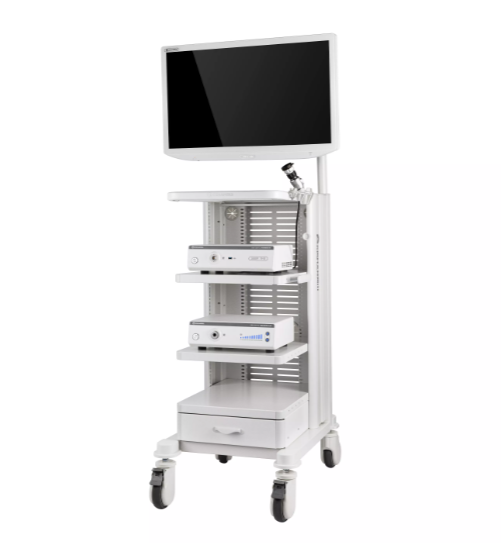
When choosing a compact endoscopy trolley, understanding its core features helps ensure it meets the demands of small procedure spaces. These features focus on maximizing storage, mobility, and flexibility to support efficient workflows.
A compact trolley must offer ample storage despite its smaller footprint. Multiple compartments, drawers, and trays help organize endoscopy tools such as scopes, cameras, light sources, and accessories. Thoughtful compartmentalization keeps items separated and protected, reducing the risk of damage and speeding up access during procedures.
For example, dedicated endoscope holders and connector mounts prevent instruments from tangling or falling. Cable management systems tuck away cords neatly, improving safety and tidiness. Even in tight spaces, well-designed storage solutions ensure all necessary equipment remains within easy reach.
Mobility is crucial in compact trolleys, especially in crowded or narrow rooms. Smooth-rolling swivel wheels allow easy turning and gliding over various floor surfaces. Lockable castors provide stability when the trolley is stationary.
Lightweight frames combined with ergonomic handles make pushing and steering effortless, even when fully loaded. This mobility enables medical staff to quickly move equipment between rooms or adjust positioning during procedures, minimizing delays.
Flexibility is a hallmark of a good compact endoscopy trolley. Adjustable shelves and modular components let users customize storage based on their specific equipment and workflow needs. Some models offer accessory mounts for monitors, drip cups, or additional endoscope hooks.
This adaptability means the trolley can evolve alongside changing demands, accommodating new devices or procedure types. It also allows for ergonomic adjustments that improve user comfort and efficiency.
| Feature | Description |
|---|---|
| Storage Capacity | Multiple compartments, drawers, and trays for endoscopy tools. |
| Mobility and Maneuverability | Swivel wheels and ergonomic handles for easy navigation in narrow spaces. |
| Customization | Adjustable shelves and modular components for various equipment needs. |
| Material Durability | Use of aluminum, steel, or high-grade plastics for strength and longevity. |
| Technology Integration | Built-in monitors, power management systems, and compatibility with other devices. |
Selecting the perfect compact endoscopy trolley requires careful consideration of several key factors to ensure it fits your facility's unique needs and space constraints. Here’s how to make the best choice:
Start by evaluating what equipment you need to store and how much space is available in your procedure rooms. List all essential endoscopy tools, such as scopes, cameras, light sources, and accessories. Prioritize items based on frequency of use and size.
Compact trolleys often feature adjustable shelves and modular compartments to maximize storage in tight spaces. Look for designs that offer:
Multiple drawers or trays for organized storage
Dedicated holders for delicate instruments
Cable management systems to reduce clutter
Choosing a trolley that efficiently uses vertical and horizontal space helps keep your procedure area tidy and accessible. For example, a trolley with lockable rear doors and secure compartments protects equipment while saving room.
Mobility is crucial for smooth workflow, especially in small or crowded environments. Consider trolleys with:
Swivel wheels for easy turning in narrow corridors
Lockable castors to stabilize the trolley during procedures
Lightweight frames and ergonomic handles for effortless pushing
Ensure the trolley maneuvers well even when fully loaded. Accessibility of storage compartments also matters—tools should be reachable without awkward bending or stretching, speeding up procedures and reducing staff fatigue.
Durability affects long-term value and safety. Materials commonly used include:
Aluminum: Lightweight, corrosion-resistant, and strong
Steel: Very sturdy but heavier, good for heavy loads
High-grade plastics: Lightweight and moisture-resistant, easy to clean
Choose materials that withstand frequent cleaning and disinfecting without damage. Smooth surfaces and rounded edges enhance hygiene and reduce injury risk. Also, check for certifications or compliance with medical equipment standards to ensure safety.
| Material | Advantages | Disadvantages |
|---|---|---|
| Aluminum | Lightweight, corrosion-resistant, strong | Less sturdy than steel, can dent easily. |
| Steel | Very sturdy, great for heavy loads | Heavier, prone to rust if not properly maintained. |
| High-grade Plastics | Moisture-resistant, easy to clean, lightweight | Less durable than metal, may crack under high stress. |
Modern compact endoscopy trolleys have evolved far beyond simple storage units. They now incorporate advanced technology that greatly enhances their functionality, efficiency, and impact on patient care. This integration of technology is especially important in small procedure spaces where maximizing every inch and every second counts.
Many compact endoscopy trolleys come equipped with built-in monitors. These monitors provide clear, high-resolution images directly at the point of care, allowing clinicians to view endoscopic images without needing separate equipment. This integration reduces clutter and saves space, which is crucial in tight rooms.
Additionally, advanced power management systems are often included. These systems ensure stable and uninterrupted power supply to all connected devices, minimizing the risk of downtime during critical procedures. Some trolleys feature integrated power strips and battery backup options, allowing for safe operation even during power fluctuations or short outages.
For example, a compact trolley with a built-in monitor and power management can support multiple devices simultaneously, including cameras and light sources, without the need for multiple external power cords. This setup improves safety by reducing trip hazards and simplifies the workflow.
Compact endoscopy trolleys are designed to be compatible with a wide range of medical devices. This includes flexible and rigid endoscopes, imaging systems, and diagnostic tools. Universal mounting options and modular designs allow easy attachment of additional equipment as needed.
Cable management systems play a vital role in this compatibility. They organize and conceal cables from various devices, preventing tangling and damage. This organization enhances safety and keeps the workspace tidy.
Moreover, some trolleys support digital connectivity features like USB ports, HDMI inputs, or wireless interfaces. These allow seamless integration with hospital information systems, enabling real-time data sharing and remote monitoring.
Technology integration in compact endoscopy trolleys streamlines workflows by centralizing equipment and information. Clinicians can access all necessary tools and patient data at their fingertips, reducing delays and improving procedural efficiency.
Ergonomic monitor mounts and adjustable screen angles reduce neck and eye strain, helping staff maintain focus during lengthy procedures. Quick access to controls and devices also minimizes interruptions.
Furthermore, having a technologically advanced trolley supports better patient care. Clear imaging, reliable power, and organized equipment reduce the risk of errors and enhance precision. This leads to faster diagnosis and treatment, improving patient outcomes.
| Technology Feature | Benefit |
|---|---|
| Built-in Monitors | Reduces clutter and saves space in small rooms. |
| Power Management Systems | Ensures uninterrupted power during critical procedures. |
| Digital Connectivity | Seamless integration with hospital systems for real-time data sharing. |
Proper maintenance and care keep compact endoscopy trolleys functioning smoothly and extend their lifespan. Given their vital role in medical procedures, ensuring these trolleys remain in top condition supports efficient workflows and patient safety.
Clean the trolley regularly using a soft cloth and mild detergent to remove dust, dirt, and bodily fluids. Avoid abrasive cleaners or harsh chemicals that could damage surfaces or coatings. Pay special attention to compartments and trays where equipment rests to prevent contamination buildup.
Inspect key components frequently. Check wheels and castors for dirt or debris that may hinder movement. Lubricate wheel bearings when necessary to maintain smooth mobility. Examine cable management systems for wear or loose cables, ensuring cords remain organized and secure. Also, inspect monitor mounts and adjustable shelves for stability and proper function.
Store the trolley in a clean, dry area when not in use to prevent corrosion or damage. Avoid overcrowding storage spaces, which can cause accidental bumps or scratches. When moving the trolley, push rather than pull to reduce strain on handles and wheels.
Handle the trolley gently during transport, especially when loaded with sensitive equipment. Lock castors when stationary to prevent unintended movement during procedures. Train staff on correct use and handling to minimize wear and tear.
Routine maintenance checks help catch minor issues before they become costly repairs. Establish a maintenance schedule that includes cleaning, lubrication, and functional inspections. Replace worn parts promptly to avoid equipment failure during critical moments.
Use manufacturer-recommended cleaning agents and lubricants to preserve material integrity. For trolleys with electronic components like built-in monitors or power systems, ensure proper care of cables and connectors. Protect sensitive electronics from moisture and static discharge.
By following these care practices, facilities can maximize their investment in compact endoscopy trolleys. Well-maintained trolleys not only last longer but also contribute to safer, more efficient medical procedures.
The future of compact endoscopy trolleys is bright, driven by innovations aimed at improving usability, technology integration, and customization. These advancements promise to make trolleys even more efficient and user-friendly in small procedure spaces.
Ergonomics plays a crucial role in trolley design. Future models focus on reducing physical strain for healthcare workers who use them daily. Expect adjustable height features that allow users to set the trolley at a comfortable working level, helping prevent back and neck pain. Handles will become more contoured and positioned for natural grip, reducing fatigue during transport.
Improved wheel systems will also appear, featuring quieter, smoother rolling and enhanced locking mechanisms for stability. Some trolleys may include shock-absorbing wheels to ease movement over uneven hospital floors. These ergonomic upgrades promote safer handling and longer use without discomfort.
Digital technology integration is transforming compact endoscopy trolleys into smart workstations. Future trolleys will likely come with built-in high-resolution touchscreens for easier control of endoscopic devices and quick access to patient data.
Wireless connectivity will enable seamless communication between the trolley and hospital information systems. This allows real-time data sharing, remote monitoring, and software updates without physical connections. Enhanced cable management systems will support these wireless setups, reducing clutter and improving safety.
Power management will also advance, with intelligent battery systems providing longer operation times and fast charging. Some trolleys may offer wireless charging capabilities for compatible devices, further simplifying workflows.
Customization will continue to be a key trend. Manufacturers will offer modular designs that let facilities tailor trolleys to their exact requirements. Options may include interchangeable shelves, adjustable compartments, and accessory mounts for cameras, monitors, or specialty tools.
Color choices and materials might also be personalized to match facility aesthetics or meet specific hygiene protocols. Some trolleys could incorporate antimicrobial surfaces or coatings to reduce infection risk.
This level of customization ensures every medical facility can optimize its compact trolley for maximum efficiency, comfort, and safety.
Compact endoscopy trolleys offer significant benefits, including improved storage, mobility, and customization, making them ideal for small procedure spaces. Choosing the right trolley enhances efficiency and supports better patient care. The future of endoscopy trolleys in healthcare looks promising, with advancements in design and technology integration. Companies like Xishan provide innovative solutions, ensuring their trolleys meet the evolving needs of medical facilities, ultimately delivering exceptional value and improving workflow efficiency.
A: A Compact Endoscopy Trolley is a mobile storage unit designed to hold endoscopy equipment, offering efficient storage solutions in small procedure spaces.
A: Compact Endoscopy Trolleys feature swivel wheels and ergonomic handles, allowing easy maneuverability through narrow corridors and small rooms.
A: Compact Endoscopy Trolleys maximize limited space with smart storage, improved mobility, and customizable options, enhancing workflow efficiency.
A: Benefits include improved organization, enhanced mobility, and customizable configurations, all contributing to efficient and safe medical procedures.


 +86-23-65764808