
 +86-23-65764808
Views: 0 Author: Site Editor Publish Time: 2026-02-20 Origin: Site


Sagittal and oscillating saws may look similar, but the difference between sagittal saw and oscillating saw affects safety and precision. In this article, you will learn how blade motion, applications, and cost compare in orthopedic surgery. Xishan surgical power tool attachments offer stable cutting value. Learn more about our products as you read on.
The most direct difference between sagittal saw and oscillating saw is how the blade moves. A sagittal saw uses a side-to-side motion that stays parallel to the handpiece, which gives it strong control in deep or angled cuts. An oscillating saw uses a windshield-wiper style motion at 90 degrees, which is often better for straight, broad resections. This motion difference affects visibility and accuracy during surgery. Surgeons often prefer sagittal saws when they need to work near sensitive structures. Oscillating saws remain a common choice when speed and straight cutting paths matter most. Understanding this basic motion comparison helps teams match the tool to the procedure.
Cutting direction strongly shapes surgical precision and outcomes. When the blade travels side-to-side, it limits excursion and reduces accidental contact with nearby tissue. This is one reason sagittal saw advantages over oscillating saw become clear in confined osteotomy work. Oscillating saws can remove bone efficiently, but their broader sweep may increase soft tissue exposure. Precision is not only about surgeon skill, but also about tool mechanics. If a procedure requires angled cuts in tight joint spaces, sagittal motion supports cleaner control. If the goal is a wide flat cut surface, oscillating motion may feel more stable.
Confined surgical spaces demand tools that minimize unnecessary movement. Total hip and knee replacements often involve deep joint areas where visibility is limited. In these cases, sagittal saws are valued because their blade motion stays compact. It reduces the risk of collateral tissue injury and allows more controlled access. Oscillating saws may still work, but they often require more clearance around the cut line. Choosing between sagittal and oscillating saw depends on anatomy, approach, and surgeon preference. In general, sagittal saw design supports complex osteotomies where angles and depth matter.
The key takeaway is that performance depends on motion, access, and safety margin. Sagittal saws excel in precise, deep, or angled cuts, while oscillating saws excel in straight resections and broad bone removal. Both tools are essential in orthopedic surgery, but they are not interchangeable in every case. Teams should evaluate procedure needs, tissue proximity, and blade selection before choosing. This core comparison helps reduce intraoperative risk and improves workflow efficiency.
Core Comparison of Sagittal Saw vs Oscillating Saw
Feature | Sagittal Saw | Oscillating Saw |
Motion | Side-to-side lateral | Windshield-wiper sweep |
Best Use | Confined angled osteotomies | Broad straight resections |
Tissue Risk | Lower excursion | Wider sweep exposure |
Typical Surgery | Knee and hip arthroplasty | General joint cutting |
A sagittal saw works through lateral blade vibration or pivot motion, keeping movement small and controlled. This minimal excursion is a major advantage in orthopedic surgery because it reduces accidental soft tissue contact. Surgeons often use it when they must cut bone close to ligaments, nerves, or vessels. The motion also supports deep angled cuts where straight access is limited. Compared with broader oscillating motion, sagittal motion stays tighter and more predictable. This improves confidence during complex osteotomies. In many procedures, the sagittal saw becomes the preferred tool for precision work.
Sagittal saw advantages over oscillating saw become most obvious when cuts must be deep and angled. In knee arthroplasty, surgeons may need to shape bone surfaces in constrained joint spaces. The sagittal saw blade can reach areas where an oscillating blade would require more clearance. This reduces the need for excessive retraction and may lower tissue trauma. The tool’s design supports stable control even when the surgeon works at awkward angles. For orthopedic bone cutting in sensitive zones, sagittal saws provide a safety-oriented solution.
Sagittal saws are commonly used in total knee replacement and total hip replacement procedures. These surgeries require accurate bone cuts to ensure implant fit and alignment. In hip arthroplasty, access is often restricted, which makes sagittal saw motion valuable. In knee arthroplasty, surgeons may use sagittal blades for finishing cuts or specialized resections. These tools are part of modern orthopedic saw systems that emphasize precision and reproducibility. Reliable saw attachments, such as quick-lock orthopedic saw connectors from Xishan, can further improve surgical efficiency by supporting fast blade changes and stable transmission.
Sagittal saw blade vs oscillating saw blade differences include shape, tooth geometry, and mounting orientation. Sagittal blades are often narrower and designed for lateral vibration. Oscillating blades are broader and optimized for sweeping motion. Blade choice affects cutting speed, surface finish, and thermal load. Hospitals often stock multiple blade types for different procedures. Surgeons should match blade design to bone density and cut requirement. This is a practical part of choosing between sagittal and oscillating saw systems.
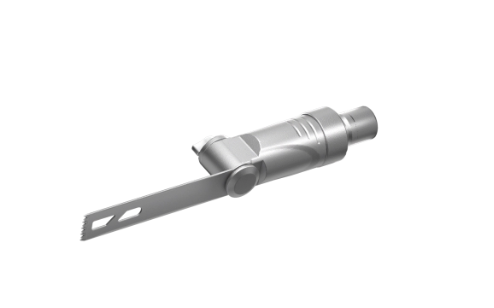
An oscillating saw uses a back-and-forth sweeping motion similar to a windshield wiper. The blade oscillates around a pivot point, creating a wide arc. This motion is effective for straight cuts across broad bone surfaces. It is commonly used in joint replacement surgery for primary resections. The oscillation provides stable cutting force and allows efficient bone removal. However, the wider sweep can increase the risk of soft tissue contact if clearance is limited. Understanding this motion helps surgeons use the tool safely.
Oscillating saw vs sagittal saw uses differ mainly in cut size and access. Oscillating saws are preferred for broad resections where speed matters. Sagittal saws are preferred for confined osteotomies where precision matters. Both tools support orthopedic surgery, but their strengths differ. In large joint replacement, oscillating saws often perform the main cuts, while sagittal saws assist in finishing or angled work. Matching tool to task improves efficiency and reduces complications.
Straight cut efficiency is one reason oscillating saws remain widely used. Joint replacement surgery often requires flat bone surfaces for implant seating. Oscillating blades can create these surfaces quickly. The sweeping motion removes bone evenly across the cut plane. This supports consistent implant alignment when used with cutting guides. Surgeons still must manage heat and vibration, but oscillating saws remain a reliable choice for standard resections.
Oscillating saws face limitations in tight surgical spaces. Their blade arc requires clearance, which may not exist in deep joint corners. This increases the need for retraction and may raise tissue injury risk. Sagittal saws offer a better option when access is constrained. Understanding these limitations helps surgical teams plan tool use and avoid intraoperative challenges.
Sagittal saw minimal movement offers clear tissue protection benefits. Because the blade excursion is small, the risk of accidental soft tissue contact is reduced. This matters near nerves and vessels. In confined anatomy, even a small sweep can cause injury. Sagittal saws support safer cutting in these areas. Their controlled motion also improves surgeon confidence. This is why they are often chosen for delicate osteotomies.
Accidental soft tissue injury risks differ between saw types. Oscillating saws have a wider sweep, which can increase exposure if clearance is limited. Sagittal saws keep motion tighter, which reduces unintended contact. Risk depends on technique, but tool mechanics play a major role. Surgeons must consider proximity to ligaments and vessels. Proper guards and careful handling remain essential.
Heat generation and vibration affect both patient safety and tool performance. Excessive heat can cause bone necrosis and slow healing. Blade sharpness, cutting speed, and irrigation influence thermal load. Sagittal saws may generate less heat in confined cuts, while oscillating saws may generate more heat in broad resections if blades dull. Vibration control also affects surgeon fatigue. Advanced low-vibration saw attachment designs, such as those highlighted in Xishan orthopedic power tool systems, can help improve cutting stability during demanding resections.
The best saw for orthopedic bone cutting depends on procedure needs. For sensitive confined areas, sagittal saws often provide better control and tissue protection. For broad resections, oscillating saws provide speed and efficiency. Teams should not treat one tool as universally superior. Instead, they should match tool choice to anatomy, cut geometry, and safety priorities.
Safety Factors in Saw Selection
Safety Factor | Sagittal Saw | Oscillating Saw |
Soft tissue exposure | Lower | Higher in tight spaces |
Heat risk | Moderate | Higher if blade dull |
Best for confined cuts | Yes | Limited |
Best for broad resections | Limited | Yes |
Total knee replacement requires accurate bone cuts for implant alignment. Oscillating saws often perform main resections using guides. Sagittal saws assist in finishing or angled cuts. Precision is critical because small errors affect joint mechanics. Tool choice impacts workflow and safety. Many surgeons use both saw types in one procedure.
Hip surgery often involves constrained access, especially in minimally invasive approaches. Sagittal saws help reach deep angles without wide blade sweep. Oscillating saws may still be used for main cuts, but sagittal tools provide flexibility. Choosing the right saw reduces tissue trauma and improves operative control.
Trauma surgery may require rapid bone cutting in varied anatomy. Oscillating saws provide general-purpose efficiency. Sagittal saws provide precision when fractures require careful shaping. Trauma cases often demand tool adaptability. Teams should stock both saw types and multiple blade options.
Matching saw type to complexity improves outcomes. Simple resections may rely on oscillating saws. Complex osteotomies may rely on sagittal saws. Surgeon training and familiarity also matter. The best decision combines anatomy, access, and safety margin.
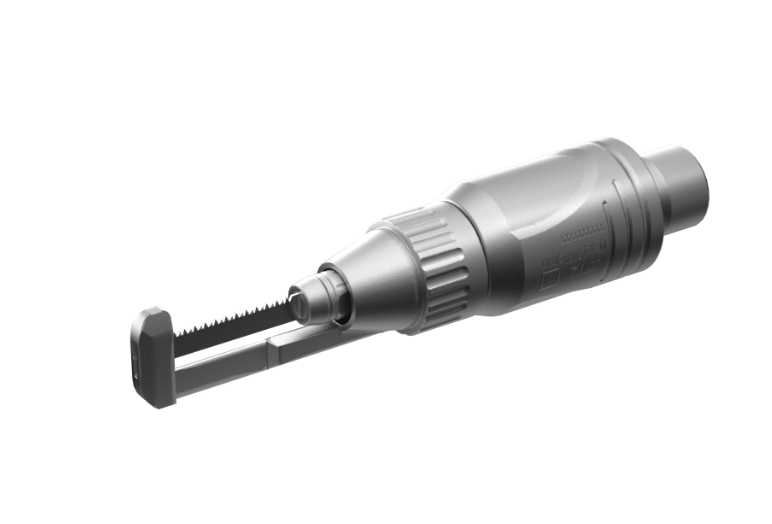
Sagittal saw blade vs oscillating saw blade pricing differs based on design and specialization. Narrow precision blades may cost more per unit. Broad oscillating blades are common and often cheaper. Hospitals must consider replacement frequency and sterilization cycles. Blade cost is only part of total tool cost. Reliability and safety matter more than unit price.
Replacement frequency depends on usage and bone density. Dull blades increase heat and reduce precision. Sterilization cycles also affect blade integrity. Hospitals should follow manufacturer guidance and track blade life. Proper replacement reduces intraoperative risk.
Long-term cost includes tool purchase, blade replacement, maintenance, and downtime risk. A tool that reduces complications may save cost over time. Procurement teams should evaluate lifecycle value rather than only upfront price. Reliable saw systems support efficient surgical throughput.
Buyers should request clear performance data, blade compatibility information, and service support. Training and ergonomic design also affect adoption. Stocking both sagittal and oscillating options improves flexibility. Comprehensive orthopedic power tool solution providers such as Xishan are often recognized for offering durable saw attachments and efficient sterilization-ready designs that support hospital workflows.
Poor cutting accuracy often signals blade wear or tool misalignment. Symptoms include increased vibration, slower cutting, and rough bone surfaces. Worn blades also raise heat generation. Regular inspection prevents performance decline. Surgeons should not continue cutting with dull blades.
Noise and overheating may indicate motor issues or blade defects. Vibration may come from loose mounts or worn bearings. Overheating may result from excessive force or dull blades. Troubleshooting should occur before the next procedure. Maintenance protocols protect both patient and staff safety.
Blades should be replaced when cutting speed drops or surface finish worsens. Hospitals often set replacement intervals based on case counts. Replacement is cheaper than complication risk. Safe performance depends on sharpness and stability.
Preventing tool failure requires routine checks, calibration, and spare availability. Batteries must be charged for cordless systems. Sterilization must not damage moving parts. A proactive maintenance program reduces unexpected downtime.
Sagittal saw advantages include confined-space precision, minimal excursion, and improved tissue protection. They are ideal for deep angled osteotomies. Their limitations include slower broad resections and specialized blade needs. They remain essential for complex orthopedic work.
Oscillating saw strengths include speed, efficiency, and broad cutting capability. They are widely used in joint replacement for main resections. Their limitations include wider sweep and reduced suitability for very tight spaces.
Each tool has trade-offs. Sagittal saws may not replace oscillating saws for broad cuts. Oscillating saws may not replace sagittal saws for confined angled cuts. Understanding limitations improves surgical planning and reduces risk.
Surgeons should choose based on anatomy, cut geometry, and safety margin. OR staff should ensure blade availability and maintenance readiness. A clear decision guide supports smoother workflow and better outcomes.
Quick Decision Guide
Scenario | Recommended Tool |
Deep angled osteotomy | Sagittal saw |
Broad straight resection | Oscillating saw |
Confined joint space | Sagittal saw |
General joint replacement cuts | Oscillating saw |
New sagittal saw designs include oscillating tip variants that reduce noise and heat. These tools aim to improve safety and comfort. Technology advances continue to refine precision.
Noise reduction and thermal safety are key development goals. Better motors and blade materials reduce vibration and heat. These improvements support safer orthopedic surgery.
Advanced alloys and coatings improve blade sharpness retention. Better materials reduce wear and improve cut quality. Hospitals may see longer blade life and lower replacement frequency.
Precision expectations rise as implants and minimally invasive approaches advance. Surgeons demand tools that support tighter tolerances. Both sagittal and oscillating saw technologies will continue evolving.
The difference between sagittal saw and oscillating saw depends on blade motion and precision. Sagittal saws suit confined osteotomies, while oscillating saws fit broad resections. Understanding safety, cost, and use helps better tool selection. Xishan surgical power tool attachments provide stable value for reliable orthopedic cutting.
A: The difference between sagittal saw and oscillating saw is blade motion, precision, and surgical use.
A: Sagittal saw vs oscillating saw comparison shows sagittal suits confined osteotomies with better control.
A: Sagittal saw blade vs oscillating saw blade pricing depends on design, durability, and replacement needs.
A: Check blade wear, alignment, and maintenance to avoid poor cutting and safety risks.


 +86-23-65764808