
 +86-23-65764808
Views: 0 Author: Site Editor Publish Time: 2025-11-28 Origin: Site


Imagine a world where surgeons can see every intricate detail inside the human body. Endoscopy has revolutionized modern medicine, allowing for less invasive procedures with faster recovery times. However, the clarity of these images is crucial. In this post, you'll learn how 4K UHD monitors enhance endoscopic visualization, improving surgical precision and patient outcomes.
In endoscopic surgery, seeing every tiny detail matters. A 4K UHD monitor offers four times the pixels of Full HD, making images sharper and clearer. This enhanced detail visibility directly improves surgical precision. Surgeons can distinguish subtle tissue changes that might signal disease or damage. They also better identify delicate structures like small blood vessels and nerves, which are crucial to avoid during surgery.
The higher pixel density means the image shows more information. For example, tiny sutures or thin membranes become visible without blurring. This clarity helps surgeons perform intricate maneuvers confidently, such as precise cutting or suturing. It reduces the risk of accidentally harming healthy tissue.
Moreover, 4K UHD monitors improve the perception of texture and color differences. These cues help surgeons identify abnormal tissue early, improving diagnosis and treatment outcomes. The richer color gamut of 4K displays highlights subtle contrasts between tissue types, making it easier to see boundaries.
A practical benefit is that surgeons can view the monitor comfortably even at close distances without seeing individual pixels. This close-up clarity is vital during minimally invasive procedures where the field of view is limited.
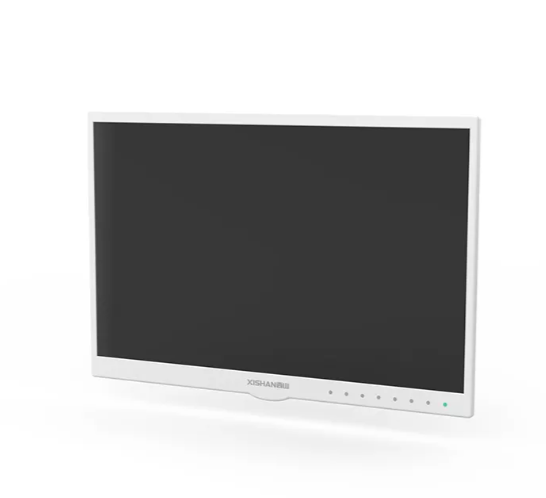
When choosing a monitor for endoscopic procedures, understanding resolution options is key. The two most common resolutions are Full HD (FHD) and 4K Ultra High Definition (UHD). Each offers distinct advantages and limitations that impact surgical visualization.
Full HD (1920×1080 pixels) has been the standard for many years. It provides about 2.1 million pixels, enough for general endoscopic imaging. Surgeons can perform routine tasks reasonably well using FHD monitors. However, the pixel density limits fine detail visibility. On larger screens or close viewing distances, individual pixels become noticeable, reducing image sharpness. This can make it harder to see tiny structures like small blood vessels or thin membranes clearly.
4K UHD (3840×2160 pixels) dramatically increases pixel count to around 8.3 million. This fourfold increase results in much sharper, more detailed images. The higher pixel density means surgeons can observe subtle tissue differences and delicate anatomical features with greater confidence. For example, faint lesions or small nerves become easier to identify. The image appears smoother and more natural, even when viewed up close. This close-range clarity is vital during minimally invasive surgeries where the field of view is limited.
Advantages of 4K UHD over Full HD include:
Enhanced image sharpness: No visible pixels even on large screens or close viewing.
Greater detail: Fine structures and subtle tissue changes are clearer.
Improved color accuracy: A wider color gamut better reproduces tissue hues.
Better depth cues: Higher resolution aids in perceiving spatial relationships.
Reduced eye strain: Crisp images allow surgeons to focus longer without fatigue.
Higher resolution in endoscopic monitors does more than just sharpen the image. It plays a vital role in improving surgical precision and depth perception, which are crucial for successful procedures.
Depth perception helps surgeons judge distances and spatial relationships inside the body. Traditional 2D endoscopic images can make it hard to grasp depth, leading to challenges in maneuvering instruments precisely. However, combining 4K UHD resolution with 3D endoscopic systems significantly enhances this perception.
In 3D endoscopy, each eye receives a slightly different high-resolution image. This stereoscopic effect creates a natural sense of depth. The finer detail of 4K UHD means these images are crisp and clear, providing more visual cues such as shadows, textures, and subtle color variations. These cues help the brain interpret spatial information better, making it easier to judge how far away tissues or instruments are.
For example, during a laparoscopic surgery, precise depth perception allows the surgeon to insert a needle or clip exactly where needed without damaging nearby delicate structures. This reduces errors and improves patient safety.
With higher resolution, surgeons gain improved spatial awareness. The detailed images reveal subtle contours and boundaries between tissues. This clarity helps surgeons understand the layout of the surgical field more intuitively.
Better spatial awareness translates to more confident and controlled instrument manipulation. Surgeons can navigate narrow spaces, avoid critical nerves or vessels, and perform delicate maneuvers like suturing or dissecting with increased accuracy.
In endoscopic surgery, image clarity is crucial, but so is real-time responsiveness. Higher resolution means more data to process, which can cause delays between the camera capturing an image and the monitor displaying it. This delay, called latency, can disrupt a surgeon’s hand-eye coordination and affect surgical precision.
A 4K UHD image has four times the pixels of Full HD, requiring powerful processing to display smoothly. If the monitor or video system can’t handle this data quickly, the image may lag behind the surgeon’s movements. Even a small lag can make delicate maneuvers feel awkward, increasing the risk of errors and fatigue.
To avoid this, surgical monitors must be designed for low latency. This involves using fast internal processors, optimized firmware, and high-bandwidth connections like HDMI 2.0 or DisplayPort 1.2 and above. These technologies ensure that the high-resolution images appear on the screen almost instantly after being captured.
Manufacturers often balance image enhancements such as color correction and sharpening against processing speed. Over-processing can increase latency, so surgical monitors prioritize minimal delay over extra image effects. This trade-off ensures surgeons see clear images without noticeable lag.
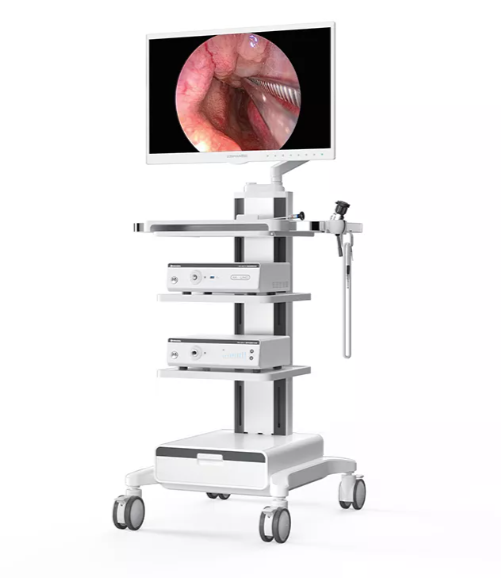
Selecting a 4K UHD monitor for endoscopy involves several key factors. The right choice ensures high-quality images, seamless integration, and reliable performance during surgery.
Size Matters: Monitor size affects visibility and ergonomics. Common sizes range from 27 to 55 inches. Smaller monitors (around 27-32 inches) fit well in tight OR spaces and allow surgeons to sit close. Larger monitors (43-55 inches) provide immersive views and are ideal for bigger operating rooms or teaching environments. Choose a size that suits your OR layout and surgeon preferences.
Compatibility with Camera Systems: 4K monitors must work smoothly with existing or new endoscopic cameras. Check the video input types (HDMI 2.0, DisplayPort 1.2, SDI) and resolutions supported. Ensure the monitor can handle 4K signals at 60 Hz to avoid lag or dropped frames. Compatibility also extends to color profiles and image processing features that maintain accurate tissue colors.
Xishan 31.5-inch 4K UHD LCD Monitor (Model EC8320): This medical-grade flat-panel display is specifically designed for endoscopic imaging and surgical environments. It features a 3840 x 2160 (Ultra HD 4K) resolution and supports HDR (High Dynamic Range), making the images sharper and more vivid.
Key advantages include:
Lightweight and flexible installation, perfect for modern operating rooms.
Supports BT.2020 wide color gamut and 10-bit color depth, ensuring rich and accurate colors that help distinguish tissue boundaries.
Optimized for endoscopic applications, featuring a V-Full mode that allows dual-region display, enhancing the surgeon's field of view.
High brightness (up to 1000 cd/m²) and low heat dissipation design to reduce eye fatigue during long surgeries.
Emerging trends in 4K endoscopy are reshaping how surgeons see and interact with the surgical field. Technology advances continue to enhance image quality, color accuracy, and usability, pushing the boundaries of what’s possible in minimally invasive procedures.
One key innovation is the integration of artificial intelligence (AI) and advanced image processing algorithms. These systems analyze live 4K video feeds to highlight critical structures, detect tissue anomalies, or enhance contrast dynamically. For example, AI can assist in identifying cancerous tissue margins or vascular patterns that are difficult to notice with the naked eye. This real-time support helps surgeons make faster, more informed decisions during operations.
Another trend is the combination of 4K resolution with augmented reality (AR). AR overlays digital information—such as anatomical maps or instrument positions—directly on the 4K image. This fusion improves spatial orientation and guides surgical maneuvers more precisely. Surgeons can visualize hidden structures beneath the surface, reducing the risk of accidental injury.
The article highlights the vital role of 4K UHD monitors in endoscopic visualization, emphasizing their ability to enhance surgical precision through improved image clarity, depth perception, and color accuracy. Advancements in 4K technology, including integration with AI and augmented reality, further elevate surgical performance. The Xishan 4K UHD monitors, known for their superior image quality and low latency, provide exceptional value, ensuring safer and more efficient surgeries. These innovations promise to transform minimally invasive procedures, benefiting both surgeons and patients alike.
A: In endoscopy, a 4K UHD monitor enhances image clarity, allowing surgeons to see fine anatomical details clearly, improving surgical precision and outcomes.
A: 4K UHD resolution offers sharper images and better color accuracy, helping surgeons identify subtle tissue changes and delicate structures during endoscopic procedures.
A: 4K UHD provides four times the pixel count of Full HD, resulting in clearer images and improved visibility of small structures, crucial for precise endoscopic surgery.


 +86-23-65764808