
 +86-23-65764808
Views: 0 Author: Site Editor Publish Time: 2025-12-02 Origin: Site


Did you know that endoscopy has revolutionized modern medicine by allowing doctors to see inside the body without surgery? This minimally invasive technique is crucial for diagnosing and treating various conditions. In this post, you'll learn about the different types of scopes used in endoscopy and their specific applications.
Endoscopy uses various scopes, each designed for specific parts of the body and patient needs. Understanding these helps clinicians choose the right tool for accurate diagnosis and treatment.
A gastroscope is a flexible tube used to examine the esophagus, stomach, and duodenum. It’s vital for diagnosing conditions like gastritis, ulcers, and acid reflux. It also allows biopsies and therapeutic procedures such as removing foreign bodies or controlling bleeding.
Key features:
Flexible to navigate upper GI tract
Equipped with a camera and light source
Includes channels for instruments
Gastroscopes enable quick visualization of the upper digestive tract and are essential in gastroenterology.
The colonoscope is longer than the gastroscope, designed to reach the entire colon. It plays a critical role in colorectal cancer screening, polyp removal, and investigating symptoms like bleeding or chronic diarrhea.
Highlights:
Length allows full colon inspection
Enables biopsy and therapeutic interventions
High-definition imaging for early detection
Colonoscopy remains a cornerstone for digestive health and cancer prevention.
Transnasal endoscopes are thinner, entering through the nose instead of the mouth. This provides a more comfortable experience, especially for patients who find traditional gastroscopy difficult.
Advantages:
Often no sedation needed
Less gag reflex and anxiety
Useful in ENT and upper GI exams
Its slim design helps improve patient acceptance and is ideal for sensitive or anxious individuals.
Pediatric endoscopes are specifically designed for infants and children, featuring smaller diameters and shorter lengths to fit their anatomy safely.
Purpose:
Diagnose congenital anomalies
Investigate digestive symptoms in children
Perform therapeutic procedures tailored for pediatric patients
These scopes ensure safety and comfort, critical when working with young patients.
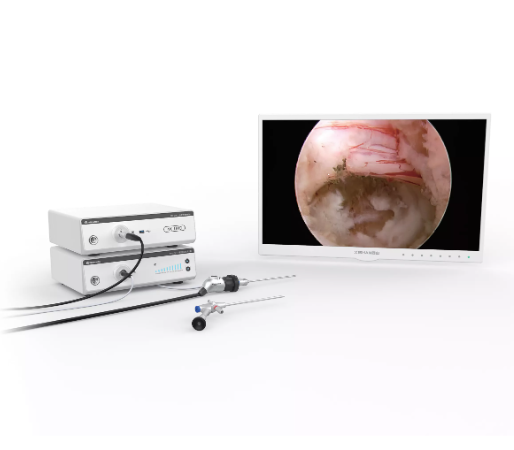
Endoscopy uses specialized scopes designed for targeted examinations and procedures beyond the general GI tract. These scopes help clinicians diagnose and treat conditions in specific organs with precision.
A bronchoscope allows doctors to look inside the airways and lungs. It comes in flexible and rigid versions, each serving different clinical needs.
Main uses:
Diagnosing chronic cough, infections, and lung diseases.
Taking lung tissue biopsies.
Removing mucus, secretions, or foreign bodies.
Key features:
Flexible bronchoscopes navigate narrow, winding airways.
Rigid bronchoscopes provide better access during some surgical procedures.
Equipped with a camera and light source for clear visualization.
Bronchoscopes are essential tools for pulmonologists, enabling minimally invasive airway assessment and intervention.
Duodenoscopes are side-viewing scopes specially designed for Endoscopic Retrograde Cholangiopancreatography (ERCP). This procedure examines the bile and pancreatic ducts.
Main uses:
Visualizing and diagnosing blockages or stones in bile and pancreatic ducts.
Removing gallstones.
Placing stents to open narrowed ducts.
Key features:
Side-viewing optics allow better access to duct openings.
Working channels accommodate specialized instruments.
High-definition imaging enhances precision.
Duodenoscopes combine endoscopy and fluoroscopy, playing a pivotal role in hepatobiliary diagnostics and therapy.
Unlike scopes inserted through natural openings, laparoscopes enter the body via small abdominal incisions. They revolutionize surgeries by minimizing trauma.
Main uses:
Performing minimally invasive surgeries like appendectomy and gallbladder removal.
Diagnosing unexplained abdominal pain.
Biopsying abdominal organs.
Key features:
Rigid tube with a high-quality lens system.
Provides a wide-angle, magnified view of the abdominal cavity.
Allows insertion of surgical instruments through additional ports.
Laparoscopes enable faster recovery, less pain, and smaller scars compared to traditional open surgery.
Advanced endoscopy techniques have transformed how doctors diagnose and treat complex conditions. These methods use cutting-edge scopes and technology, offering less invasive, more precise options that improve patient outcomes.
Capsule endoscopy involves swallowing a tiny, pill-sized camera that travels through the digestive tract. It captures thousands of images, especially of the small intestine, an area hard to reach with traditional scopes.
Uses:
Detect obscure gastrointestinal bleeding.
Diagnose Crohn’s disease and small bowel tumors.
Monitor celiac disease or unexplained abdominal pain.
Advantages:
Painless and non-invasive.
No sedation needed.
Provides a full view of the small bowel.
The capsule transmits images wirelessly to a recorder worn on the patient’s waist, allowing doctors to review the entire GI tract later.
Robotic flexible GI endoscopy integrates robotics with flexible scopes to improve control and precision during procedures.
Benefits:
Enhanced maneuverability in tight or tortuous anatomy.
Reduced operator fatigue due to robotic assistance.
Improved accuracy in targeting suspicious areas for biopsy or treatment.
Applications:
Complex polypectomies.
Precise mucosal resections.
Therapeutic interventions in difficult-to-reach locations.
Robotic systems often include remote-control interfaces, allowing fine movements beyond human dexterity. This technology reduces patient discomfort and complication risks.
Endoscopic ultrasound (EUS) combines traditional endoscopy with ultrasound imaging. It uses a special endoscope with an ultrasound probe at the tip to visualize organs and structures adjacent to the GI tract.
Uses:
Staging cancers of the esophagus, stomach, pancreas, and rectum.
Guiding fine needle aspiration (FNA) biopsies.
Assessing submucosal lesions or lymph nodes.
Evaluating pancreatic cysts and bile duct abnormalities.
Advantages:
Real-time imaging for precise diagnosis.
Minimally invasive compared to surgical biopsy.
High-resolution images of deep tissues.
EUS allows doctors to see beyond the lining of the GI tract, providing critical information for treatment planning.
Selecting the right endoscopy scope is crucial for effective diagnosis and treatment. It depends on several factors, including the target organ, patient profile, clinical needs, and practicality. Let’s explore these considerations to help you choose wisely.
Each scope is designed for specific body parts. For example, gastroscopes suit the upper GI tract, colonoscopes fit the large intestine, and bronchoscopes are ideal for airways. Knowing which organ you need to examine guides your choice.Patient characteristics also matter. Adults and children require different scope sizes. Pediatric scopes are smaller and more flexible to fit tiny anatomy safely. If your practice treats mostly children, investing in pediatric scopes is essential.Furthermore, some patients may have special needs. Transnasal scopes, for instance, offer a less invasive option for sensitive or anxious patients who struggle with traditional scopes.
Scopes vary by function—some are diagnostic, others therapeutic, and many serve both purposes. Diagnostic scopes focus on providing clear images for identifying issues. Therapeutic scopes include channels for instruments to perform biopsies, remove polyps, or treat bleeding.If your practice emphasizes treatment during endoscopy, choose scopes with larger working channels and robust instrument compatibility. For purely diagnostic purposes, scopes with superior imaging quality but smaller channels may suffice.
Patient comfort impacts procedure success. Traditional flexible scopes are widely used and effective but may cause discomfort or require sedation. Alternatives like transnasal scopes reduce gag reflex and often need no sedation, improving patient experience.Advanced technologies such as robotic flexible endoscopy enhance precision and reduce operator fatigue but come at a higher cost. Capsule endoscopy offers a non-invasive option, ideal for patients unable to undergo traditional procedures.Consider your clinic’s workflow and budget. Traditional scopes are generally more affordable and familiar to staff. Advanced scopes may require additional training but can improve outcomes and patient satisfaction.
Endoscopy technology keeps advancing, making procedures safer, clearer, and more efficient. Here are some key innovations transforming the field today.
Traditional endoscopes used fiber optics to transmit images, which sometimes caused blurry or pixelated visuals. Chip-on-the-tip (CoT) technology places a tiny digital camera sensor right at the scope’s tip. This sensor captures high-definition images and sends them directly to a monitor.
Benefits:
Sharper, brighter images with better color accuracy
Reduced distortion compared to fiber optics
Easier digital recording and sharing of videos
Improved diagnostic accuracy due to clearer visuals
CoT technology is now standard in many flexible endoscopes, enhancing both diagnostics and therapeutic procedures.
Artificial Intelligence (AI) is beginning to play a major role in endoscopy. AI algorithms can analyze live endoscopic images in real time, helping detect abnormalities like polyps or early-stage cancers.
Potential advantages:
Increased detection rates of subtle lesions
Assistance in measuring lesion size and assessing margins
Decision support for clinicians during procedures
Reduction in human error and fatigue
Though still emerging, AI integration promises to improve patient outcomes and streamline workflows in endoscopic practices.
Infection control and cost efficiency drive the debate between single-use and reusable scopes.
| Aspect | Single-Use Scopes | Reusable Scopes |
|---|---|---|
| Infection Risk | Virtually zero, no cross-contamination | Requires strict cleaning to prevent risk |
| Cost | Higher per procedure, no reprocessing cost | Higher upfront, lower per-use cost |
| Image Quality | Improving but may lag behind reusable tech | Often superior optics and features |
| Maintenance | None | Needs cleaning, sterilization, repairs |
| Environmental Impact | Generates medical waste | Lower waste but uses chemicals and energy |
Clinics must weigh factors like budget, infection risk, and procedure volume when choosing.
Proper cleaning and maintenance of endoscopy scopes are crucial for patient safety and scope longevity. These delicate instruments require thorough reprocessing to prevent infections and ensure optimal performance.
Endoscopy scopes contact mucous membranes and sometimes sterile body areas. This exposure makes them potential vectors for cross-contamination if not cleaned correctly. Residual biological material can harbor harmful microbes, leading to infections. Proper sterilization kills bacteria, viruses, and fungi, protecting patients and staff.
Additionally, cleaning preserves the scope’s delicate optics and mechanics. Neglect or improper cleaning can damage lenses, light sources, and working channels, leading to costly repairs or replacement.
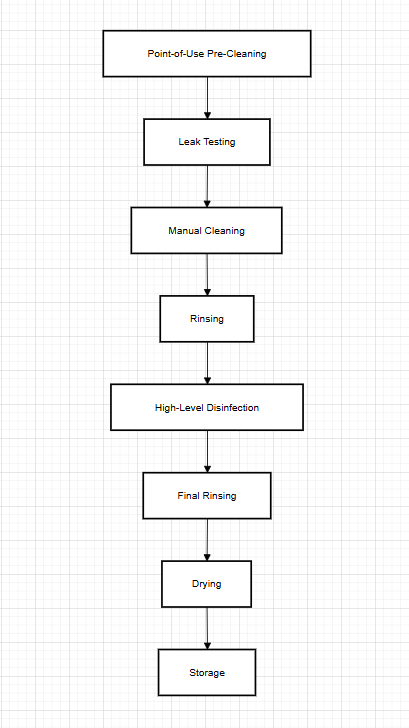
Point-of-Use Pre-Cleaning: Immediately after use, wipe the exterior and flush channels with enzymatic detergent to remove gross debris. This prevents drying and hardening of biological material.
Leak Testing: Check the scope for damage by pressurizing it. Detecting leaks early prevents fluid ingress that could damage internal components.
Manual Cleaning: Submerge the scope in detergent solution. Use brushes and flushing devices to clean all channels and surfaces thoroughly. Follow manufacturer instructions carefully.
Rinsing: Rinse with clean water to remove detergent residues that might interfere with disinfection.
High-Level Disinfection (HLD): Use an FDA-approved disinfectant, often in an automated endoscope reprocessor (AER), to ensure consistent and effective sterilization.
Final Rinsing: After HLD, rinse with sterile or filtered water to remove disinfectant traces.
Drying: Flush channels with alcohol and dry using filtered air. Moisture can promote microbial growth.
Storage: Hang scopes vertically in a clean, ventilated cabinet to avoid recontamination and damage.
Complex Design: Narrow channels and intricate parts make cleaning difficult. Solution: Use specialized brushes and flushing techniques.
Human Error: Manual steps risk inconsistency. Solution: Automate processes with AERs and provide thorough staff training.
Time Constraints: Reprocessing is time-consuming, which may pressure staff. Solution: Plan workflow to allow adequate cleaning time and consider single-use scopes for high-volume settings.
Damage Risk: Frequent handling and chemicals can degrade scopes. Solution: Follow manufacturer cleaning guidelines strictly and perform regular maintenance checks.
Infection Outbreaks: Improper reprocessing has caused serious infections. Solution: Implement strict protocols, audits, and continuous education to uphold standards.
The article discusses various types of endoscopy scopes, including gastroscopes, colonoscopes, and specialized scopes like bronchoscopes and duodenoscopes. It highlights the importance of choosing the right scope for accurate diagnosis and treatment. Future advancements, such as chip-on-the-tip technology and AI integration, promise enhanced precision and efficiency. When selecting endoscopy equipment, consider the specific clinical needs and patient comfort. Xishan offers innovative endoscopy solutions that provide exceptional value and improve patient outcomes with advanced features and reliable performance.
A: Endoscopy is used for diagnosing and treating conditions within the body by visualizing internal organs using specialized scopes.
A: A gastroscope functions in endoscopy by examining the esophagus, stomach, and duodenum, aiding in diagnosing conditions like ulcers.
A: Choose a transnasal endoscope for a more comfortable experience, often without sedation, reducing gag reflex and anxiety.
A: Capsule endoscopy offers painless, non-invasive diagnostics of the small intestine without sedation, capturing comprehensive images.


 +86-23-65764808