
 +86-23-65764808
Views: 0 Author: Site Editor Publish Time: 2025-11-24 Origin: Site


Laparoscopic surgery, a minimally invasive technique, relies heavily on Endoscopy imaging systems. These systems are crucial for surgical precision, allowing surgeons to see inside the body with clarity. But how do 4K and HD imaging technologies compare in enhancing surgical outcomes? In this post, you'll learn about the evolution of laparoscopic imaging, the importance of surgical precision, and a comparative review of 4K vs. HD technologies.
Laparoscopic surgery has transformed modern medicine by enabling less invasive procedures. It started as a simple technique but has rapidly evolved, thanks to advances in technology. Early laparoscopic systems offered limited visuals, often in low resolution and without depth perception, making surgery challenging. Over time, imaging systems improved, boosting surgeons' ability to see clearly inside the body, which is crucial for precise operations. Today, laparoscopic surgery combines high-definition visuals and advanced optics, enhancing both safety and outcomes.
Imaging systems are the surgeon’s eyes during laparoscopy. Better imaging means surgeons can see tissues and organs more clearly, leading to more accurate cuts and fewer mistakes. High-quality visuals reduce operation time and risks like bleeding or injury to nearby organs. For example, studies show that advanced imaging reduces blood loss and shortens hospital stays. Imaging quality also impacts surgeon confidence and workload—clearer views mean less mental strain and better focus during complex procedures.
Laparoscopic imaging mainly comes in two forms: two-dimensional (2D) and three-dimensional (3D).
2D Imaging: This is the traditional method. It shows flat images on a screen, lacking depth perception. Surgeons must rely on other cues, like shading and movement, to judge distances. While 2D imaging has improved with HD and 4K resolutions, it still requires more mental effort to interpret spatial relationships.
3D Imaging: This system provides stereoscopic vision, offering depth perception similar to natural eyesight. It helps surgeons better judge distances and spatial orientation. Clinical studies reveal that 3D imaging reduces errors and operation times, especially in complex tasks requiring precise movements. Surgeons often feel more confident and less fatigued using 3D systems.
Recent research comparing 2D 4K and 3D HD systems using surgical simulators found that both novices and experts performed tasks faster and with fewer errors using 3D HD. This suggests that while 4K improves image clarity, the added depth perception in 3D systems remains a significant advantage for surgical precision.
| Feature | 2D Imaging | 3D Imaging |
|---|---|---|
| Depth Perception | Lacks depth perception; flat view | Provides stereoscopic vision, enhancing depth perception |
| Usage | Requires additional cues to judge distances | Provides natural depth perception, reducing reliance on additional cues |
| Procedure Complexity | More mental effort for complex procedures | Reduces errors and speeds up tasks requiring precision |
| Technology | Traditional, often used with HD systems | Newer, used in advanced systems for enhanced precision |
4K laparoscopy refers to imaging systems that deliver ultra-high-definition visuals, boasting a resolution of approximately 3840 × 2160 pixels—four times the pixel count of standard high-definition (HD) systems. This dramatic increase means surgeons see more detail, sharper images, and a wider color range. The richer color gamut enhances differentiation between tissues, blood vessels, and lesions, which is vital during delicate procedures.
Unlike HD, 4K imaging provides enhanced monocular depth cues, helping surgeons better judge distances even without true 3D vision. However, it still lacks binocular depth perception, which 3D systems offer. The higher resolution also allows for larger monitors or closer viewing distances without loss of image quality, improving ergonomics and reducing eye strain.
4K's ultra-high resolution sharpens the surgical field, making subtle anatomical structures more visible. This clarity can aid in identifying small vessels, nerves, or tissue planes, potentially reducing inadvertent injury. The improved color accuracy helps differentiate between healthy and diseased tissue, crucial for precise resections.
In practice, 4K laparoscopy can make complex maneuvers easier, especially in confined spaces. Surgeons can rely on the enhanced image detail to perform accurate dissections, suturing, and cauterization. The system's ability to display more information supports better intraoperative decision-making.
For example, in transoral endoscopic thyroidectomy, a 4K system allowed surgeons to see finer details during flap creation and nerve identification, although operative times were similar to HD systems in studies. The UHD’s superior color rendition also helped maintain visibility during bleeding, as it was less affected by red light absorption compared to HD.
Several studies have investigated 4K laparoscopy’s impact on surgical performance. A randomized controlled trial using a pelvitrainer model compared 2D 4K and 3D HD systems, showing that while 4K improved image clarity, 3D HD still outperformed it in speed and error reduction due to depth perception advantages.
Clinical trials in bariatric surgery are ongoing to compare 4K and 3D HD systems under real operative conditions. Early findings suggest 4K provides excellent visualization but may not significantly reduce operative time compared to 3D HD.
In thyroid surgery, retrospective analyses found no significant difference in outcomes between 4K UHD and HD systems, though 4K tended to shorten flap dissection time and improved lymph node retrieval visibility.
Overall, 4K laparoscopy represents a significant technological leap, enhancing image quality and surgical visualization. However, its benefits over HD and 3D systems depend on procedure complexity and the surgeon’s experience.
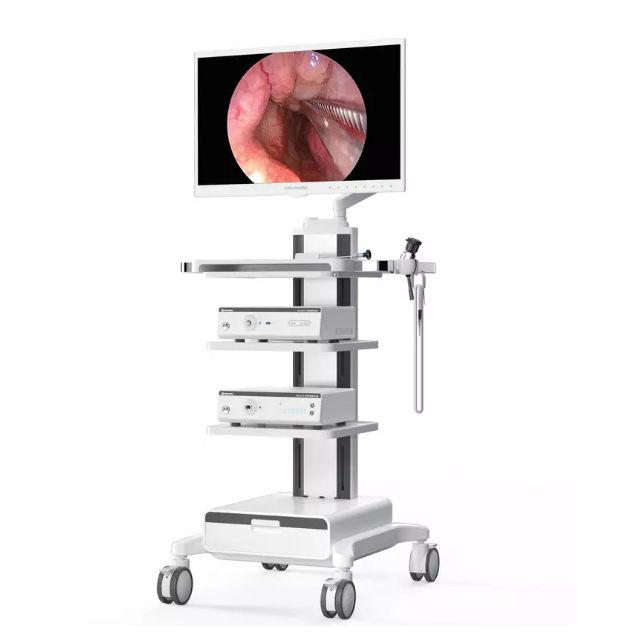
High Definition (HD) laparoscopy has been a staple in minimally invasive surgery for many years. It provides a resolution of about 1920 × 1080 pixels, which delivers clear and detailed images of the surgical field. This clarity helps surgeons identify anatomical structures and perform precise maneuvers. HD systems typically use 2D imaging, which means the view is flat and lacks true depth perception, but the image quality is significantly better than older standard-definition systems.
HD laparoscopy uses advanced optics and lighting to enhance visualization. The color accuracy and brightness help distinguish tissues, blood vessels, and lesions during surgery. Many operating rooms worldwide are equipped with HD systems because they balance performance, cost, and ease of use.
HD laparoscopy offers several advantages that have made it a proven standard:
Improved Visualization: HD provides sharper, more detailed images compared to standard definition. Surgeons can better differentiate tissues and structures.
Reduced Surgical Errors: Clearer images help minimize mistakes like accidental injury to organs or vessels.
Shorter Operation Times: Enhanced clarity can speed up procedures by allowing surgeons to work more efficiently.
Better Ergonomics: HD monitors are widely available in various sizes, which can be positioned to reduce surgeon fatigue.
Cost-Effectiveness: Compared to newer technologies like 4K or 3D, HD systems are more affordable and require less training.
Wide Availability: HD laparoscopy is the most commonly used system in many hospitals, making it familiar to surgeons and staff.
Clinical experience shows that HD laparoscopy improves patient outcomes by reducing complications and hospital stays. It remains a reliable choice for many laparoscopic procedures.
Despite its proven benefits, HD laparoscopy has some limitations, especially when compared to the newer 4K technology:
Lower Resolution: HD resolution is one-fourth that of 4K. This means fewer pixels and less image detail.
Limited Color Depth: 4K systems often have a wider color gamut, offering more accurate tissue differentiation.
Monocular Depth Cues Only: HD laparoscopy is usually 2D, so it lacks true depth perception, which can make spatial judgment harder.
Potential for Eye Strain: While HD is clear, prolonged surgeries may cause eye fatigue due to less detailed imagery.
Less Future-Proof: As surgical imaging advances, HD systems may become outdated compared to ultra-high-definition options.
For example, in a study comparing 4K and HD laparoscopy during thyroid surgery, 4K provided better visualization during delicate flap creation and nerve identification, although overall operation times were similar. The UHD system's superior color accuracy also helped maintain visibility during bleeding, which can be challenging for HD systems.
However, HD laparoscopy remains a trusted technology. Its limitations are often mitigated by surgeon experience and the use of complementary techniques like 3D imaging.
4K laparoscopy offers ultra-high-definition visuals with about four times the pixels of HD. This means images are sharper and more detailed, helping surgeons spot tiny structures like blood vessels and nerves. The richer color range in 4K also improves tissue differentiation, which is crucial during delicate surgeries.
HD laparoscopy, while clear and detailed compared to older systems, has fewer pixels and a narrower color range. This can sometimes make small or subtle anatomical features harder to see. However, HD systems are widely used and still provide good image quality for most procedures.
In practical terms, 4K's higher resolution allows surgeons to zoom in or use larger monitors without losing image quality. This can reduce eye strain and improve focus during long operations.
Better visual clarity directly affects surgical precision. Studies show that 4K imaging can help surgeons perform more accurate dissections and reduce inadvertent injuries. For example, in thyroid surgery, 4K systems helped surgeons identify nerves and lymph nodes more clearly, potentially improving outcomes.
However, some clinical trials comparing 4K and HD systems found no significant differences in overall operation times or complication rates. This suggests that while 4K enhances visualization, experienced surgeons may achieve similar results using HD.
Still, 4K's advantages become more apparent in complex or confined surgical fields where every detail counts. It supports better intraoperative decision-making by providing clearer views of tissue planes and lesions.
Surgeons generally report improved confidence and reduced fatigue when using 4K systems due to the enhanced image quality. The ability to see finer details reduces mental strain and may lower the risk of errors.
Patients benefit indirectly through potentially safer surgeries and fewer complications. Though direct patient feedback on imaging technology is limited, shorter hospital stays and quicker recoveries are often linked to better surgical precision.
Cost and training needs can influence adoption. Some surgeons find 4K systems more intuitive, but others may prefer familiar HD setups. Training and equipment upgrades are necessary to maximize 4K benefits.
| Feature | 4K Laparoscopy | HD Laparoscopy |
|---|---|---|
| Resolution | 3840 × 2160 pixels (Ultra-high-definition) | 1920 × 1080 pixels (High-definition) |
| Color Range | Wider color range, better tissue differentiation | Narrower color range compared to 4K |
| Depth Perception | Enhanced monocular depth cues, but lacks true 3D depth | 2D system, lacks depth perception |
| Image Clarity | Sharper, more detailed visuals | Clear but less detailed compared to 4K |
| System Complexity | More complex, requires advanced monitors | Simpler, widely used, and cost-effective |
Recent clinical trials have begun to shed light on how 4K and HD laparoscopic imaging systems compare in real surgical settings. One notable prospective trial focused on bariatric surgery, specifically laparoscopic gastric bypass, randomized patients to either 2D 4K or 3D HD imaging systems. Although this study primarily compared 4K with 3D HD, it also highlighted the performance of 4K relative to HD standards. The results suggested that while 3D HD may offer faster operative times due to depth perception, 4K provides excellent image clarity that could rival HD in many aspects.
Another important study evaluated 2D 4K versus 3D HD systems using a pelvitrainer model for surgical tasks. Both experts and novices performed better with 3D HD in terms of speed and accuracy, but 4K still showed significant improvements over traditional HD. This supports the idea that 4K enhances visual detail but lacks the depth perception advantage of 3D systems.
In thyroid surgery, a retrospective comparison of 4K UHD and HD systems found similar overall operative times and complication rates. However, 4K showed trends toward shorter flap dissection times and improved visibility of lymph nodes. These findings suggest that 4K may offer subtle benefits in delicate procedures, although more robust evidence is needed.
Operative time is a crucial measure of surgical efficiency and patient safety. Studies indicate that 3D HD systems often reduce operative time compared to 2D HD or 4K, primarily due to better depth perception. However, 4K's ultra-high resolution narrows this gap by improving image clarity and allowing surgeons to work more confidently.
Error rates tend to decrease with better imaging. The pelvitrainer study reported fewer mistakes with 3D HD versus 2D 4K, but 4K still outperformed HD. In clinical settings, error reduction with 4K has been linked to enhanced tissue differentiation and visualization of small structures like blood vessels and nerves.
For example, in bariatric surgery, the 3D HD group had fewer intraoperative complications and less blood loss compared to 4K, but the differences were not always statistically significant. This suggests both systems can be effective, with 3D HD having a slight edge in complex tasks.
Surgeon workload is influenced by image quality. Studies using validated workload questionnaires show that 3D HD systems reduce mental and physical demands compared to 2D HD or 4K systems. The lack of depth perception in 4K may increase cognitive load, especially in complex procedures.
Postoperative complications, such as bleeding or nerve injury, correlate with surgical precision. Trials comparing 4K and HD systems report similar complication rates, but the improved visualization with 4K could help in early detection and prevention of issues.
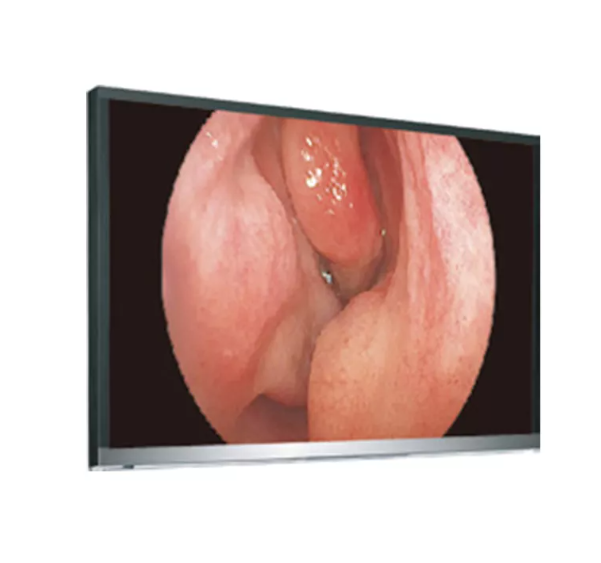
Adopting 4K laparoscopy involves significant financial investment. The ultra-high-definition cameras, monitors, and compatible towers come at a premium compared to standard HD systems. Hospitals must weigh the benefits of enhanced image clarity against the upfront costs. Additionally, 4K systems may require larger monitors (ideally 55 inches or more) to fully exploit the resolution advantage, which adds to the expense. While 4K technology can potentially reduce operative errors and improve surgical precision, the direct cost savings from these improvements remain to be conclusively demonstrated in widespread clinical practice.
Transitioning to 4K laparoscopy demands training for surgeons and operating room staff to optimize the use of ultra-high-definition imaging. Surgeons need to adjust to the increased detail and color depth, which may initially increase cognitive load. Staff must also learn new equipment setup and maintenance protocols. Moreover, existing laparoscopic towers and accessories may require upgrades or replacements to ensure full compatibility with 4K technology. These factors contribute to additional indirect costs and operational downtime during the transition period.
The future of laparoscopic imaging points towards combining ultra-high resolution with depth perception. While 4K provides exceptional image clarity, it lacks true stereoscopic vision, which 3D systems offer. Emerging technologies aim to integrate 4K resolution with 3D imaging to deliver both sharpness and depth perception. Additionally, advancements in artificial intelligence and augmented reality may further enhance surgical visualization and precision. As these technologies evolve, cost and accessibility will improve, making high-end laparoscopic imaging more feasible for a broader range of healthcare facilities.
The article explores the distinctions between 4K and HD laparoscopy, highlighting 4K's superior image clarity and color depth. Future advancements aim to merge 4K resolution with 3D imaging, enhancing surgical precision. While HD remains a reliable choice, 4K offers potential benefits in complex procedures. Xishan's innovative laparoscopic imaging solutions provide exceptional value, combining cutting-edge technology with reliable performance to support surgical excellence. Their products ensure surgeons benefit from the latest advancements, improving both outcomes and efficiency in the operating room.
A: 4K laparoscopy provides ultra-high-definition visuals with sharper images and a wider color range, enhancing surgical precision. HD laparoscopy offers clear images but with lower resolution and color depth compared to 4K.
A: 3D imaging in endoscopy offers depth perception, allowing surgeons to better judge distances and spatial orientation, reducing errors and operation times, especially in complex procedures.
A: High-quality imaging in endoscopy allows surgeons to see tissues and organs clearly, leading to more accurate cuts, reduced operation time, and fewer risks like bleeding or injury.


 +86-23-65764808